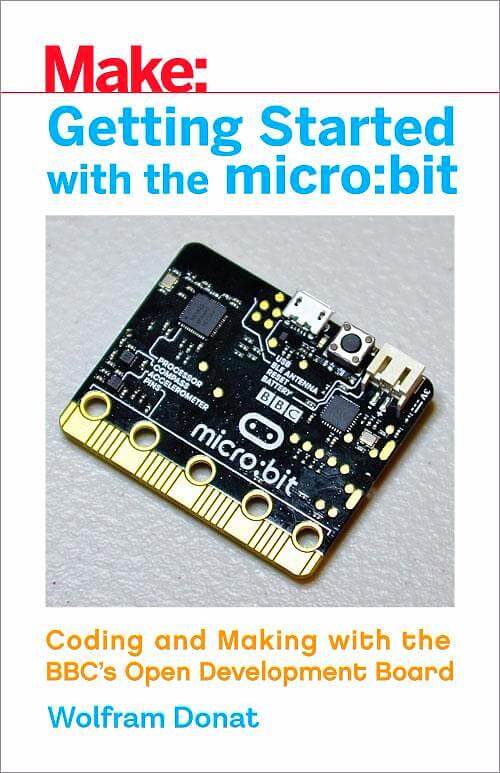
Make: Getting Started with the micro:bit - PDF
COVERS micro:bit V.1, all of the information is still valid to the V.2 for the most part, with the exception of the new hardware additions (look for a 2nd edition coming up).
This book will teach you how to really harness the power of the micro:bit. You'll learn about sensors, Bluetooth communications, and embedded operating systems, and along the way you'll develop an understanding of the next big thing in computers: the Internet of Things.
With this book, you'll learn
- About the advanced hardware that makes the micro:bit work
- How to program the micro:bit using different languages, including Python, JavaScript, and C++
- How to connect your micro:bit to another intelligent device like a smartphone — or even another micro:bit
- How to write text using LEDs, and read from the onboard accelerometer
- How to connect the micro:bit to a motor controller and make a simple mini bot
Meet the Author
COVERS micro:bit V.1, all of the information is still valid to the V.2 for the most part, with the exception of the new hardware additions (look for a 2nd edition coming up).
This book will teach you how to really harness the power of the micro:bit. You'll learn about sensors, Bluetooth communications, and embedded operating systems, and along the way you'll develop an understanding of the next big thing in computers: the Internet of Things.
With this book, you'll learn
- About the advanced hardware that makes the micro:bit work
- How to program the micro:bit using different languages, including Python, JavaScript, and C++
- How to connect your micro:bit to another intelligent device like a smartphone — or even another micro:bit
- How to write text using LEDs, and read from the onboard accelerometer
- How to connect the micro:bit to a motor controller and make a simple mini bot
Meet the Author
Original: $7.99
-70%$7.99
$2.40Description
COVERS micro:bit V.1, all of the information is still valid to the V.2 for the most part, with the exception of the new hardware additions (look for a 2nd edition coming up).
This book will teach you how to really harness the power of the micro:bit. You'll learn about sensors, Bluetooth communications, and embedded operating systems, and along the way you'll develop an understanding of the next big thing in computers: the Internet of Things.
With this book, you'll learn
- About the advanced hardware that makes the micro:bit work
- How to program the micro:bit using different languages, including Python, JavaScript, and C++
- How to connect your micro:bit to another intelligent device like a smartphone — or even another micro:bit
- How to write text using LEDs, and read from the onboard accelerometer
- How to connect the micro:bit to a motor controller and make a simple mini bot
Meet the Author